Surgical
MOHS Micrographic Surgery
What is MOHS Surgery?
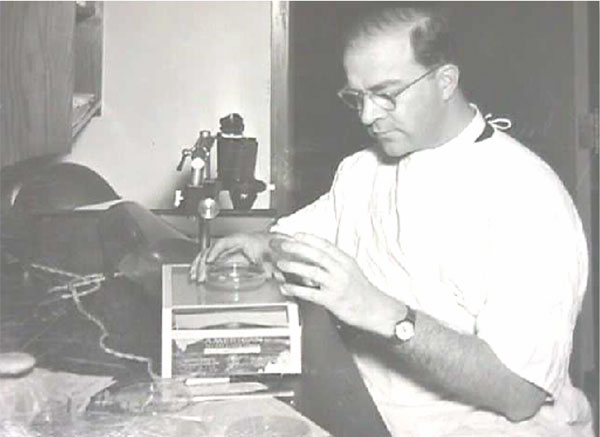
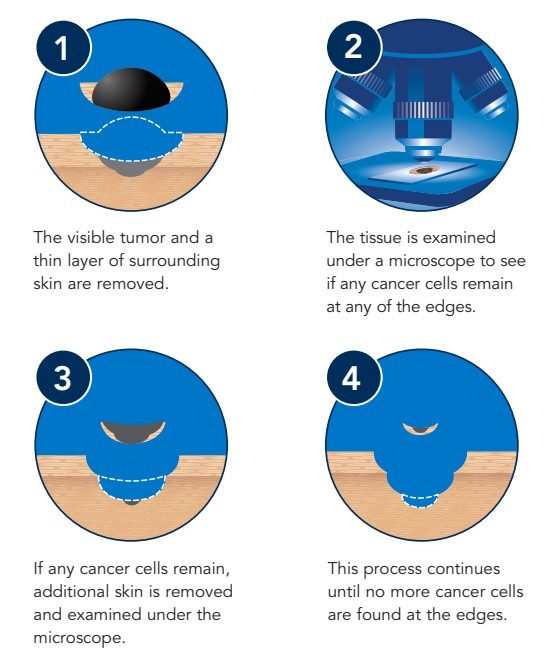
The term "Mohs" refers to Dr. Frederic Mohs, Professor of Surgery at the University of Wisconsin, who developed this surgical technique in the early 1940s. The technique has undergone many refinements and has come to be known as "Mohs surgery" in honor of Dr. Mohs. Dr. Mohs recognized that a skin cancer often resembles a "tip of the iceberg" with more tumor cells growing downward and outward into the skin, like the roots of a tree. These "roots" are not visible with the naked eye, but can be seen under a microscope. Mohs Micrographic Surgery is a highly specialized and precise treatment for skin cancer in which the cancer is removed in stages, one tissue layer at a time. It is an outpatient procedure. The removal technique is no different than other procedures; however it is distinguished by a specific technique of tissue examination that is unique to Mohs surgery.

Continued below...
Once a tissue layer is removed, the edges are marked with specially colored dyes, and a map of the specimen is created. The tissue is then processed onto microscope slides by a Mohs technician. These slides are carefully examined under the microscope by the Mohs surgeon so that any microscopic roots of the cancer can be precisely identified and mapped. When cancer cells are seen, an additional tissue layer is removed only in areas where the cancer is still present, leaving normal skin intact. This saves as much normal, healthy skin as possible. Once the cancer has been removed, the Mohs surgeon will explain options for repair of the wound, including natural healing (granulation), stitching the wound together by a side to side closure, or using a skin flap or graft.
I don’t see anything after my biopsy: do I really need to be treated?
Yes. Following a biopsy, your skin cancer may no longer be visible. However, the surface lesion that was removed can represent the "tip of an iceberg." More tumor cells may remain in the skin. These can continue to grow downward and outward, like roots of a tree. These "roots" are not visible with the naked eye. If they are not removed, the tumor will likely reappear and require more extensive surgery. Tumors that are neglected can spread deeply into the skin and invade nearby structures. On rare occasions, these cancerous cells can metastasize and spread to lymph nodes and other organs in the body.
When might Mohs Surgery be appropriate for me?
There are several reasons why your particular skin cancer may need to have Mohs Surgery, they include:
- The skin cancer is in an area where it is important to preserve healthy tissue for maximum functional and cosmetic result, such as eyelids, nose, ears, lips, fingers,toes, and genitals
- The skin cancer was treated previously and has come back
- Scar tissue exists in the area of the skin cancer
- The skin cancer is large
- The edges of the skin cancer cannot be clearly defined
- The skin cancer is growing rapidly or uncontrollably
- The skin cancer is of an aggressive subtype (i.e. sclerosing or infiltrating basal cell carcinoma).
Will there be a scar from my Mohs Surgery?
Yes. Any treatment for skin cancer will leave a scar. Mohs surgery preserves as much normal skin as possible and maximizes options for repairing the area where the skin cancer had been. Once the Mohs surgeon has completely removed your skin cancer, optimizing the final cosmetic result of your surgery becomes our highest priority. Generally, a post-surgical scar improves with time and can take up to one year or more to fully mature. As your surgical site heals, new blood vessels can appear and support the healing changes occurring underneath the skin. This can result in the reddish appearance of the scar. This change is temporary and will improve with time.
*Please check with your physician to see if MOHS surgery is appropriate for you.
Information developed with the help of The American College Of Mohs Surgery and The American Society for Mohs Surgery
The materials on this Web site are made available by Dermatology Associates of San Antonio (“Dermatology Associates”) for informational purposes only and are not medical advice. The transmission and receipt of information contained on the Web site do not form or constitute a physician-patient relationship. Communications with Dermatology Associates via this Web site or via email do not establish a physician-patient relationship. Persons should not act upon information on this site without seeking professional medical advice from a licensed physician.
Some links within the Dermatology Associates' Web site may lead to other sites. The Dermatology Associates' Web site does not incorporate any materials appearing in such linked sites by reference, and Dermatology Associates does not necessarily sponsor, endorse or otherwise approve of such linked materials.